
The meaning of agile at organisational and project level
Agile is an increasingly popular approach in modern organisations. Some companies are explicitly agile, while in others traditional project management and agile methodologies work together in a hybrid way.
But what exactly is agility? In what business environment is it effective? What misconceptions surround it? And what does an agile mindset mean? In this article, we explore these questions.
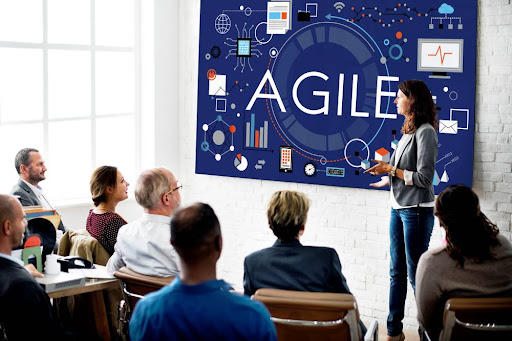
What is the word agile and what does agility mean?
To understand the meaning of agility, it is worth starting from the original meaning of the word and then looking at how agile has become a fundamental concept in modern organisations.
The meaning of agile
In the traditional sense, the word agile means a person who is ready, willing, eager, agile, enterprising, energetic, and full of life.
In an organisational context, the meaning of agile is much more complex. It refers to a way of working in which an organisation:
- adapts quickly to a changing environment
- constantly learns and develops
- focuses on creating customer value
- works iteratively, in short cycles
Agility is not just a methodology, but also a mindset and an organisational culture.
The essence of agile operation
Agile organisations do not focus on short-term profit maximisation, but on sustainable value creation based on customer value.
This is reflected in day-to-day decisions, project management and teamwork.
Features:
- flexibility and responsiveness
- continuous feedback
- learning from mistakes
- self-organising teams
In what business environment is agile effective?
The agile approach is not a universal solution. It works well primarily in environments where:
- projects are implemented in an ever-changing environment
- quick decisions are needed
- customer needs are dynamic
Most often:
- in software development
- in research and development
- innovation-driven areas
For stable, well-planned projects, traditional methods can still be effective.
Old and new paradigm: traditional vs. agile organisation
To understand how agile organisations work, it is worth first looking at the principles that have driven - and in many cases still drive - traditional corporate structures. The difference between the two approaches is not only methodological, but also attitudinal and cultural.
Traditional, hierarchical organisation
The classic corporate model:
- pyramidal structure
- top-down decision-making
- strong hierarchy
- profit- and efficiency-driven operations
This model has been highly successful for a long time.
Ford and Taylor: unprecedented efficiency and effectiveness
One of the best-known examples of traditional organisation is the Ford Motor Company. In the early 1910s it was one of many small car manufacturers, but a decade later it dominated around 60% of the global new car market. Assembly time fell from 12 hours to 90 minutes per vehicle, the price dropped from $850 to $300, while the company paid its workers competitive wages.
The success was based on the scientific management principles of Henry Ford and Frederick Taylor, which aimed to systematically optimise labour productivity. These ideas laid the foundations for modern quality management and project management and, as Gareth Morgan interpreted it, led to the hierarchical, machine-like operation of Taylorist organisations like Ford's, which have excelled and dominated their markets for decades.

Digital revolution - new organisational challenges
Over the past decades, digital transformation has fundamentally changed the operating environment:
- rapidly changing customer needs
- the emergence of disruptive technologies
- the democratisation of information
- increasing competition for talent
This has led to an ongoing paradigm shift, where hierarchical organisational structures are being dismantled and replaced by networked agile organisations.
The agile organisation: stable and dynamic at the same time
An agile organisation paradoxically operates within a stable framework, yet is highly flexible.
It is like a living organism that:
- forms independent, cooperative teams
- is motivated by a shared vision
- creates value in short iterations
- relies on continuous feedback and improvement
New technologies, automation and optimisation are a natural part of the way we operate.

Why is an agile mindset important?
An agile transformation often provokes resistance and uncertainty. This can be addressed through conscious communication and training.
A prerequisite for the effectiveness of agile operations is that staff understand and apply the agile principles.
What are the characteristics of an agile mindset?
- cooperation
- continuous development and learning
- innovative approach
- adapting to change
- speed and efficiency
- ability to convert failures into opportunities
The meaning of Agile - common misconceptions
Agility is often seen as a fashionable solution, but it is not ideal for all organisations. It is primarily effective in environments where needs and goals are constantly changing; for stable, well-planned projects, traditional methods may be appropriate.
It is important to stress that agile does not necessarily mean a complete organisational transformation. A hybrid approach - where only individual teams work according to agile principles - is a realistic and workable solution in many cases.
It is also a common misconception that agile projects are not planned. In fact, there is planning and documentation, but in shorter timeframes. In contrast to the waterfall methodology, the agile approach thinks in terms of iterations, followed by regular evaluation and redesign.
FAQ - Frequently asked questions about agility
What is the difference between agile operations and agile methodology?
Agile is an overall organisational approach, while agile methodologies (e.g. Scrum, Kanban) are practical tools.
Can agility be partially introduced?
Yes. Many organisations successfully use a hybrid model where only certain teams work according to agile principles.
How long does it take for an agile transformation to pay for itself?
This depends largely on the size, culture and goals of the organisation. In the short term, there is often an increase in efficiency and transparency.
Is agility a culture or a process?
Both. Lasting results can only be achieved if processes and mindsets are transformed simultaneously.
What are the first steps to get started?
Small-scale pilot projects, training and clear targets can help you get started successfully.
What can we help with?
In recent years, our colleagues with experience in agile coaching, product ownership, development, and consulting/training have supported dozens of agile teams and organisational agility initiatives.
We are not agile evangelists, we don't believe that agile trends are the solution to everything. We believe that these tools can help in everyday work, and that incorporating this way of thinking into day-to-day operations to the right extent can bring short-term success to projects and organisations.
If you would like to learn more about the fundamentals of agility, the Scrum, or even the Kanban approaches, we recommend our Agile Project Management program.
If, as a project manager, as a Product Owner, or as a newly starting Scrum Master you would like to try out the planning process and tools on a real project, we recommend our Agile Simulation.
For Scrum Masters, we provide support through open and in-house programs, as well as Scrum.org and SAFe international exam preparation.
If you have any questions or if you don't know how to proceed, please feel free to contact us.
Find our quality agile training courses here >>
